Thorpe Triangle Trust

The triangle at Thorpe is cut, insured and looked after by the people who live here. Twenty-one households. No council, no funding, and no charge to sit on it.

If you've stopped here on your way between Linton and Burnsall, rested on a bench or eaten your lunch under the trees, this is who keeps it that way.

The triangle

The triangle is about 320 square metres of open ground at the road junction in the centre of Thorpe, in the Yorkshire Dales National Park. Drystone walls enclose all three sides, with an irregular grass verge outside them. Roads run along all three sides, a track leaves to the south east, and Thorpe Beck lies to the east.

It is open to everyone at all times. There is no charge, no membership requirement and no gate that locks.

It sits on the walking route between Linton and Burnsall and on the White Rose cycle route. In season eighty to a hundred walkers a day stop on it, many of them eating their lunch under the trees, along with cyclists resting.

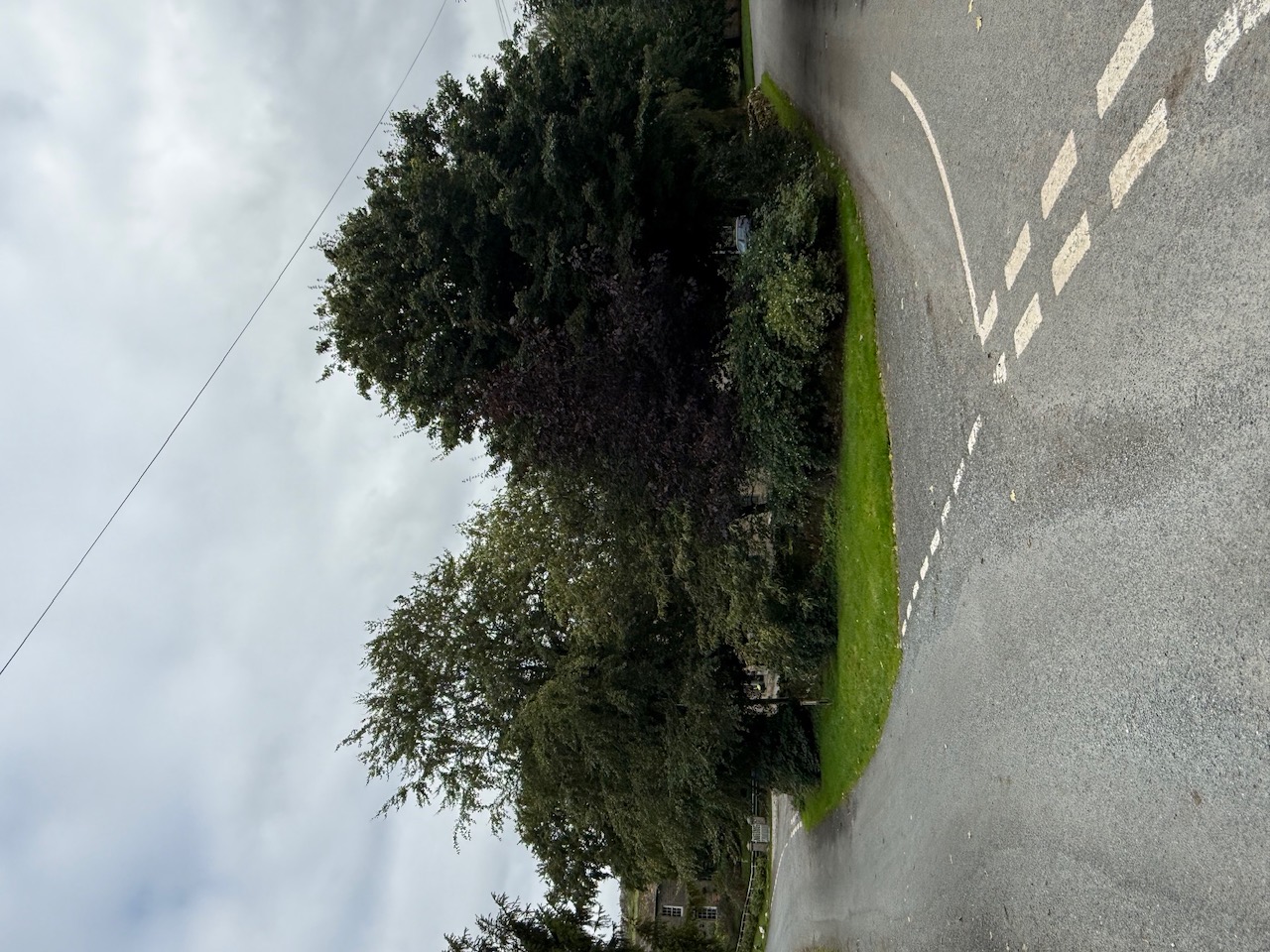
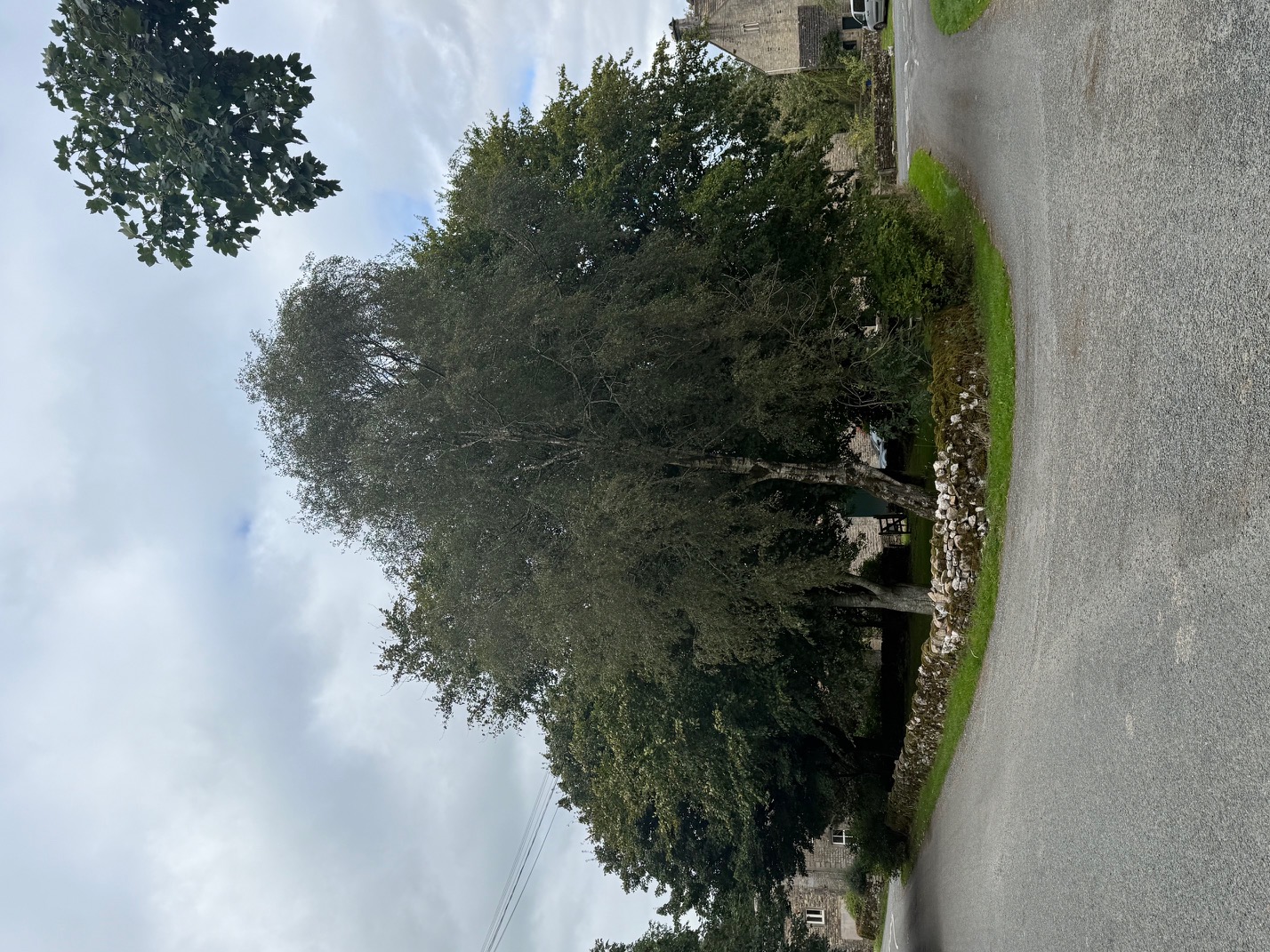
From the south, the way you come up from Burnsall. September 2026.
Can you help with a tank of fuel for the mower? £1.57Donate

What the charity is for

Thorpe Triangle Trust is a Charitable Incorporated Organisation, registered charity 1219468, registered on 1 September 2026. The village set it up for one purpose: to buy the triangle and keep it open, permanently.

Its objects, as registered, are:

(1) to provide facilities in the interests of social welfare for recreation and leisure time occupation, with the objective of improving the conditions of life for those living in, working in or resorting to the Parish of Thorpe, North Yorkshire, including tourists and visitors; and

(2) to provide, maintain and improve public amenities in the Parish of Thorpe, including open space and public seating, which are not otherwise provided out of public funds.

Or a month's grass cutting? £6.28Donate

What is on it

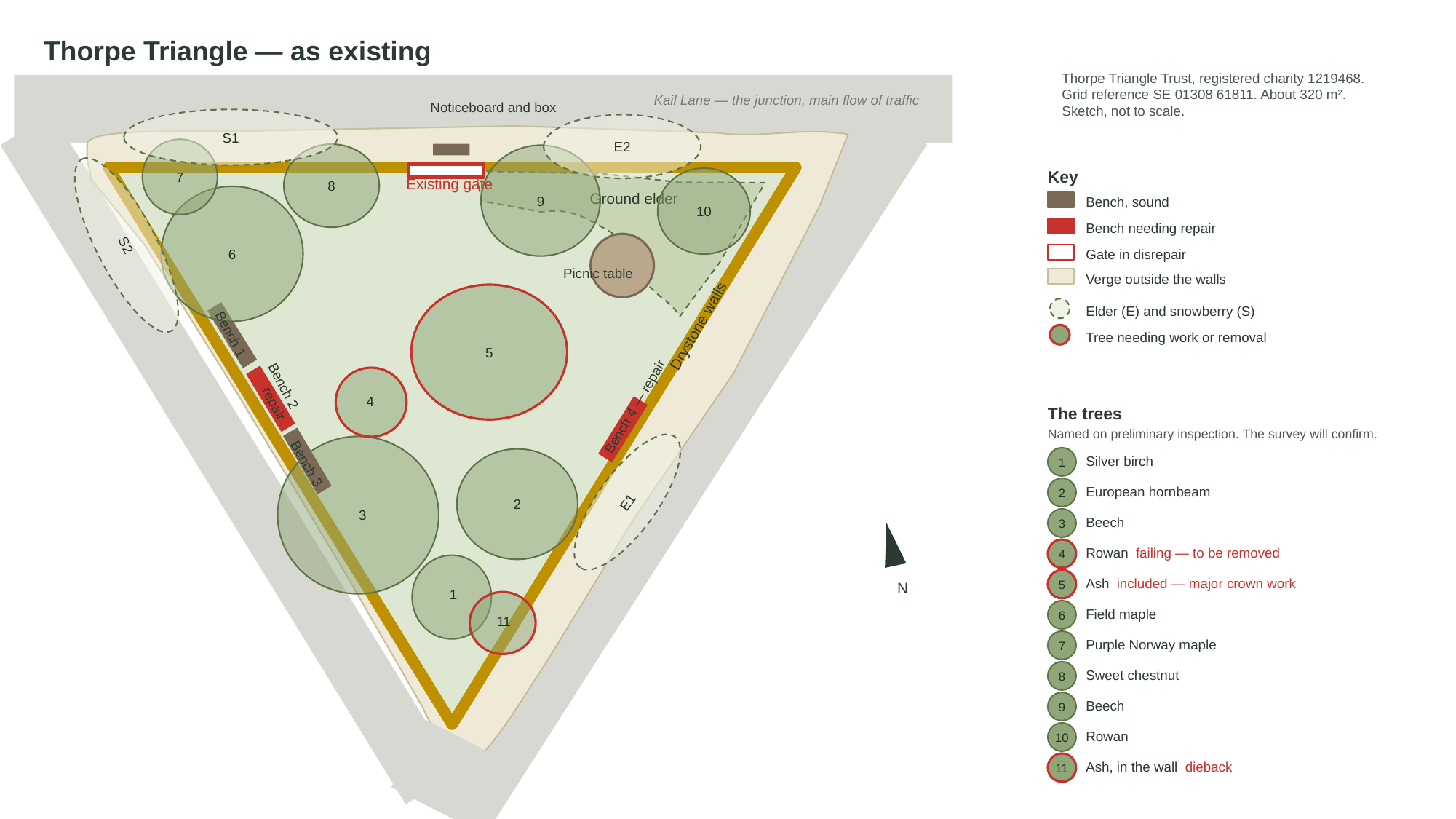
Eleven trees and four shrubs, four benches, a picnic table, a noticeboard and a contributions box.

Drystone walls on all three sides, with a grass verge outside them. There is a gate in the middle of the north wall.

Ground elder has taken hold inside the north east corner, and there is snowberry on the verge to the north west.

The trees, shrubs, benches and gate. A sketch, not to scale.
What about a new plank for the bench? £7.45Donate

The trees

Eleven trees stand on the land. The village's own account is that twelve were planted in 1987 by the late Fred Clayton, with money from the St John Ambulance Fund, and that seven died within a year and were replaced. Some of those now standing look older than that would suggest.

The species below are the trustees' own identification from the ground and are provisional. A qualified arboriculturist has been asked to survey them, and that survey will settle both the species and what work each tree needs.

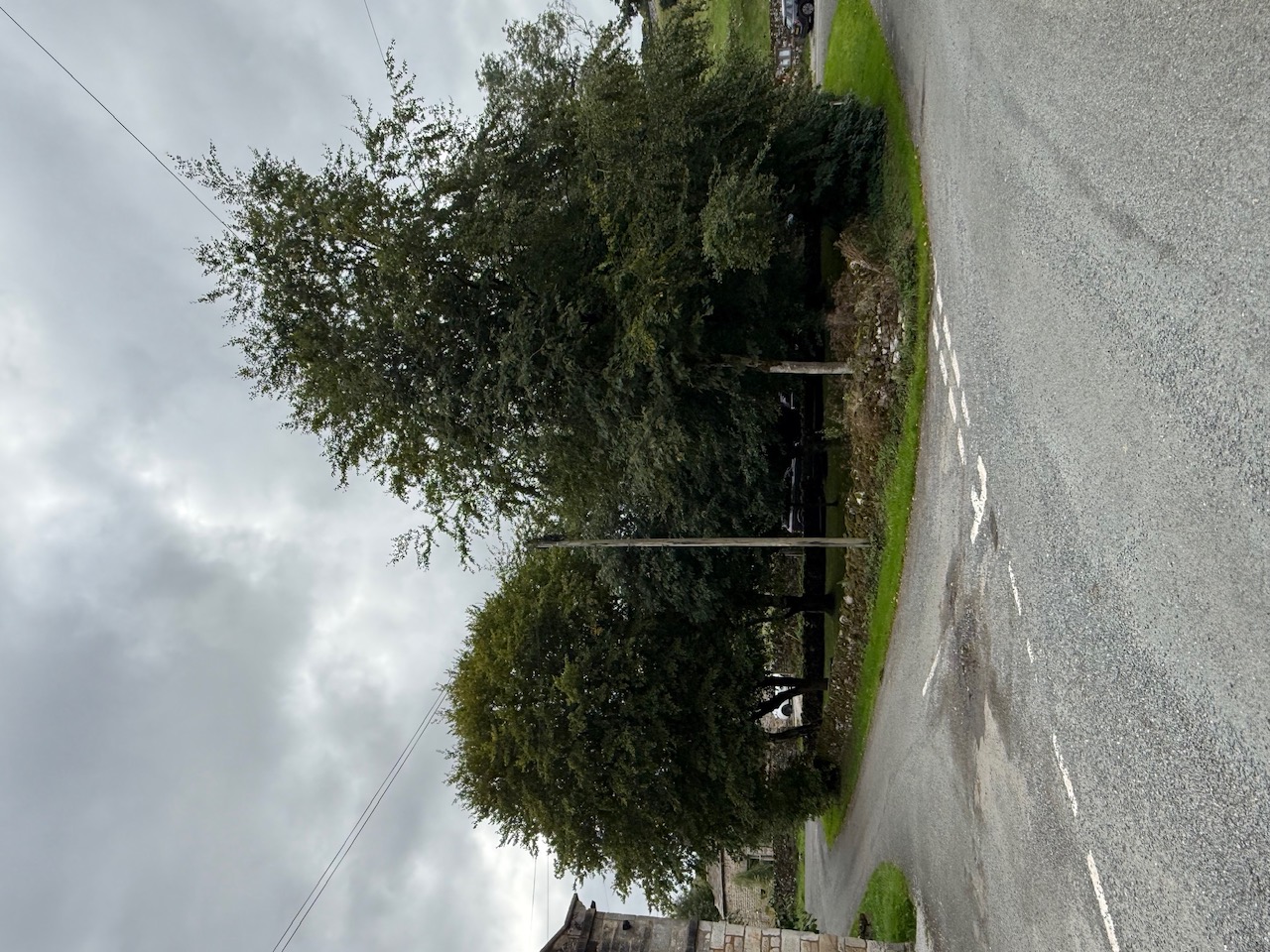
From the north west, looking across the verge.
From the north east.
The eleven trees and four shrubs, with their botanical names

Every name below is the trustees' own identification from the ground and is provisional until the survey. The links go to the Royal Horticultural Society's page for each species.

1 Silver birch — Betula pendula. West side, close to the wall along the Linton road. RHS

2 European hornbeam — Carpinus betulus. North west, inside the wall, facing the house. RHS

3 Beech — Fagus sylvatica. West side, inside the wall. RHS

4 Rowan — Sorbus aucuparia. Centre west RHS

5 Ash — Fraxinus excelsior. The centre of the triangle, and the largest tree on the land RHS

6 Field maple — Acer campestre. East side, inside the wall. RHS

7 Purple Norway maple — Acer platanoides. East side, towards the shrub line. RHS

8 Sweet chestnut — Castanea sativa. North west, beside the gap in the wall. RHS

9 Beech — Fagus sylvatica. North east, inside the wall. RHS

10 Rowan — Sorbus aucuparia. North east corner, near the ground elder. RHS

11 Ash — Fraxinus excelsior. South east, growing out of the top of the wall near the south vertex RHS

E1, E2 Elder — Sambucus nigra. Outside the wall, south east and north east. RHS

S1, S2 Snowberry — Symphoricarpos albus. On the verge to the north west. RHS
Or a new latch for the gate? £12.12Donate

Looking after it

Residents have cut the grass and looked after the trees at their own expense for about fifty years, and that does not change now the charity owns the land.

What does change is that the charity carries the liability. Public roads run along all three sides and the crowns of several trees reach out over them; overhead cables cross the canopy at the north east corner; and the benches sit directly beneath the trees and are in daily use. So the trustees have allowed for inspection by a qualified arboriculturist every two years, as the insurers expect and as the case law on trees beside a public highway requires.

Insurance and the mower have to be paid for every year, whoever owns the land.

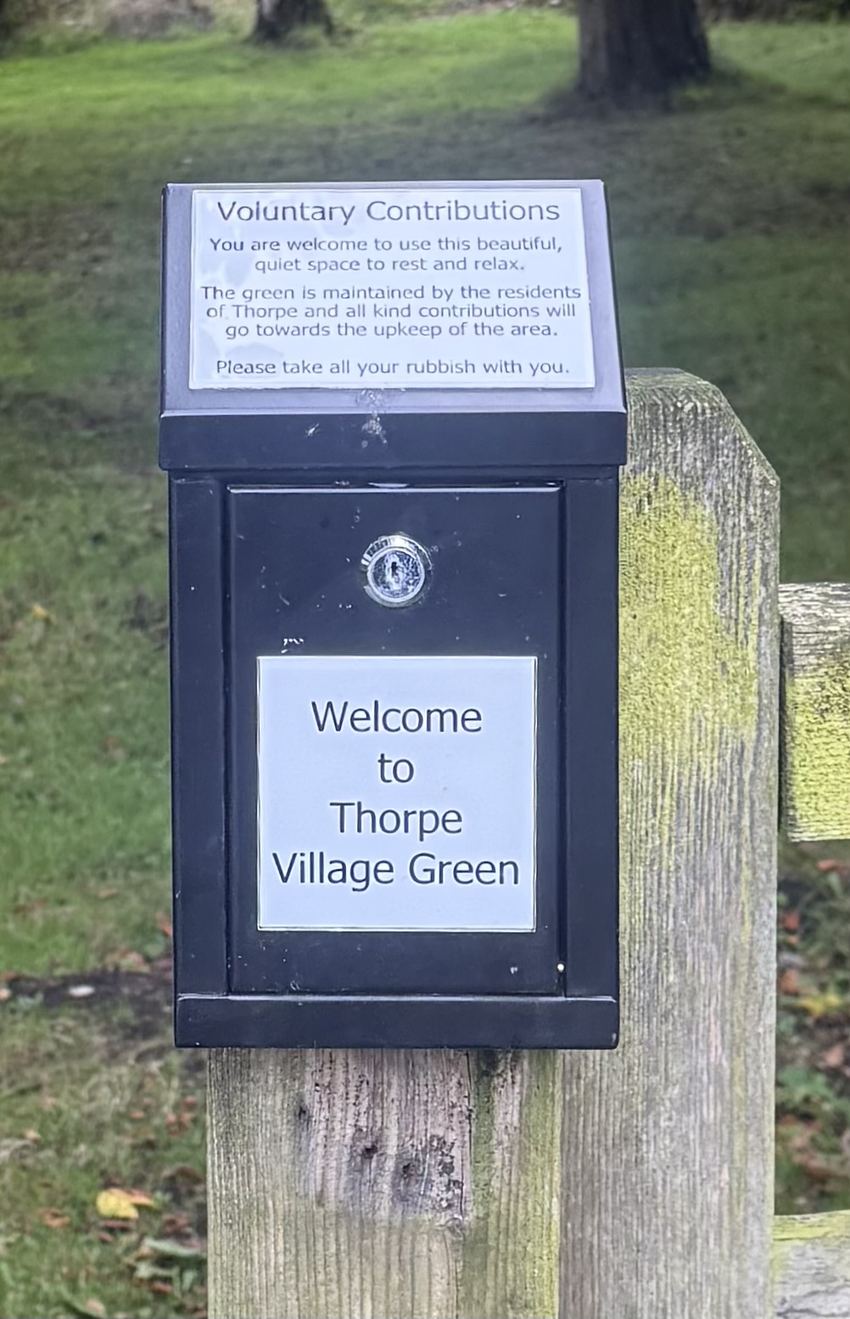
The box on the gatepost, for anyone who wants to leave something towards the upkeep.
Can you stretch to three new planks for the bench? £22.35Donate

Can you help us by funding any of the following?

Nobody is paid, and nothing goes anywhere else.

Card, Apple Pay and Google Pay. Gift Aid adds 25p to every pound if you pay UK tax.